
Why foot traffic changes the bag brief
Trade show footfall is not the same as a staff walkabout or a client lunch. Visitors spend hours on hard floors, carrying brochures, a notebook, a water bottle and a phone, then moving between halls, coffee points and seminar rooms. If the bag is too bulky, too deep, or awkward to reach into, people stop using it properly and it ends up on a chair or folded under an arm.
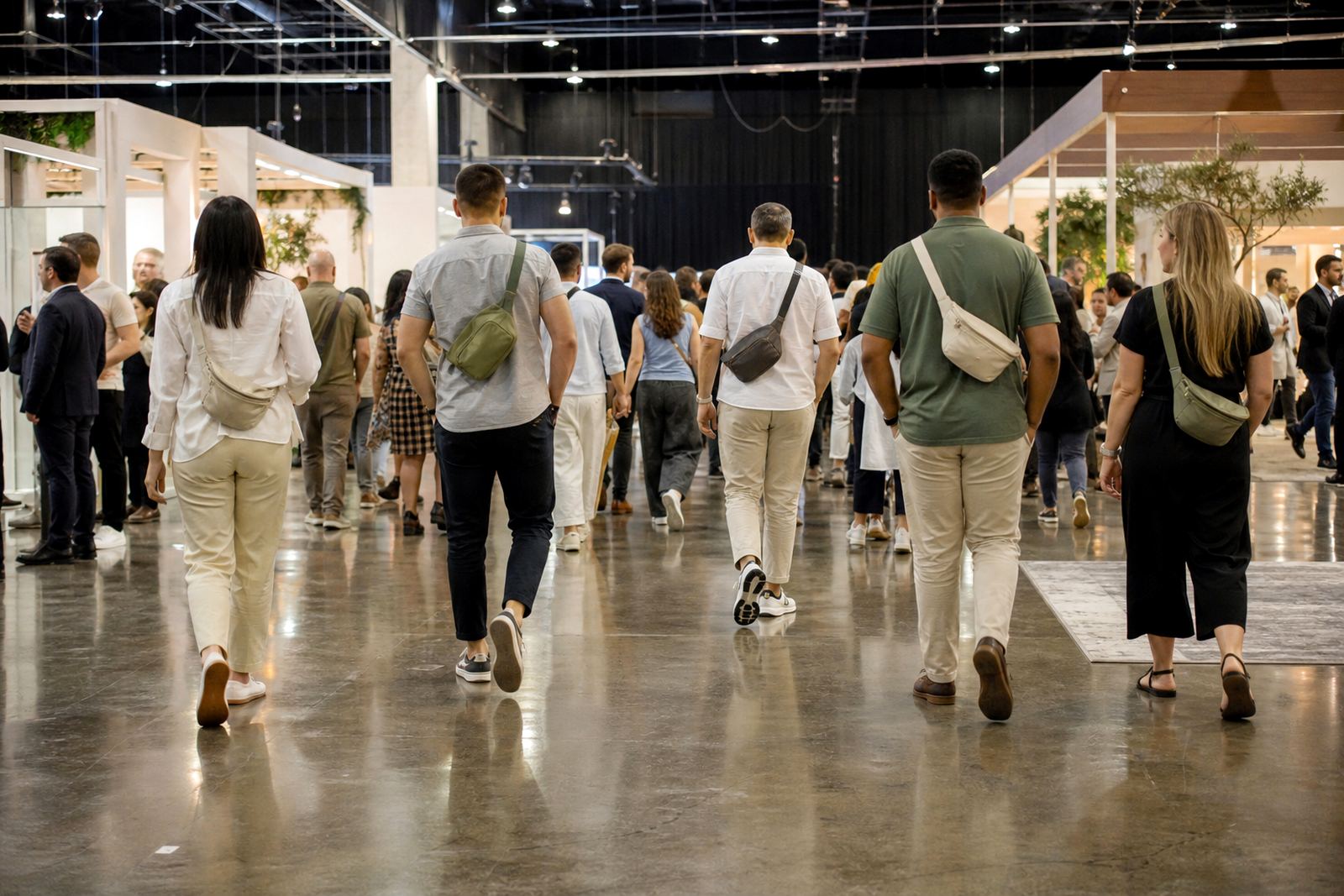
For corporate events in Cape Town, Johannesburg, Pretoria, Durban and Gqeberha, the practical goal is simple: choose a bag that stays comfortable from the first stand to the last. A good belt bag supports that flow because it sits close to the body, does not swing around, and lets visitors keep both hands free for samples, pamphlets and handshakes.
- Hands stay free for notes, drinks and product samples
- Valuables stay close in crowded aisles
- Branding remains visible at chest or waist level
- Visitors are less likely to leave the bag behind
Size and pocket layout decide whether it gets used
Size matters more than most organisers expect. A bag that is too small can only hold a phone and one card holder, while an oversized style becomes heavy once it is filled with chargers, brochures and event passes. The sweet spot for trade show use is a compact main compartment with one secure front pocket and a smooth zip. That gives enough room for the basics without encouraging overpacking.
Think about how people move through long corridors at the CTICC, Gallagher or ICC type venues. They do not want to stop and dig around for a lanyard or access card. A front pocket for quick access is useful, and a simple lining makes it easier to find small items in low light or during load shedding interruptions. Small details like that matter on a busy stand, even if they seem minor at first.
- Main compartment for phone, wallet, keys and pass
- Front pocket for tickets, cards or a room key
- Wide zip opening for faster access
- Adjustable strap for waist or crossbody wear
Material choice for coastal humidity and daily handling
In South Africa, the environment affects how a promotional bag wears. Cape Town and Gqeberha can bring coastal humidity, while Durban adds heat and moisture that tests stitching and zips. A bag for trade show footfall should handle repeated use, not just one event day. Materials with a tighter weave hold their shape better and are easier to wipe clean after a long day of handling.
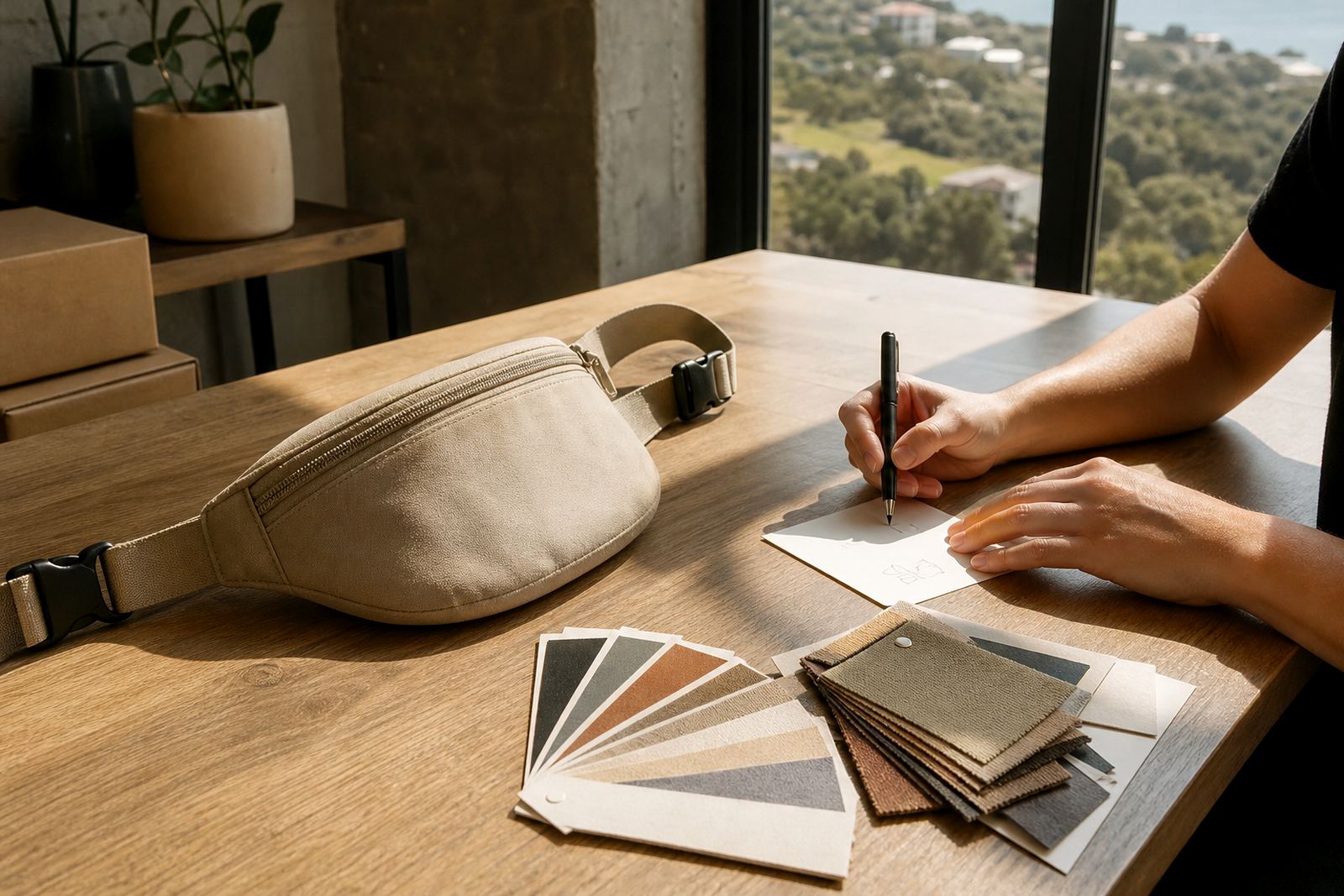
For busy event teams, it also helps if branding methods suit the fabric. Screen printing works well for simple logos and solid colour blocks. Heat transfer suits fine detail and short runs. Embroidery gives a neat raised finish on thicker panels. Debossing can work for a cleaner, low-profile look on suitable material. We guide clients on what will suit the shape and the intended use, because the wrong finish can crack, fray or look untidy after a few shows.
Stitching and zip quality should not be treated as extras. If the bag is going to be filled, opened and closed all day, those points get tested hard. A small fault can become a complaint by lunch.
Branding that reads from a distance without shouting
At a trade show, a bag is both a carry item and a moving signboard. The best branding is clear enough to be recognised from a few metres away, but calm enough that people will wear it all day. Large logos can work on a plain front panel, while smaller marks suit a neater corporate look. If the artwork is too detailed, it can disappear once the bag starts moving with the body.
There is a practical rule here: design for walking, not for a flat mockup. When someone is in motion, only the strongest parts of the mark will carry. A clean logo, one or two colours, and enough contrast between the bag and the print usually gives the best result. If your team is planning split delivery across different cities, keeping the branding consistent also helps the event team look organised from one venue to the next.
- Use strong contrast between bag colour and logo colour
- Keep text short and readable at a glance
- Place the mark where it will not crease at the zip
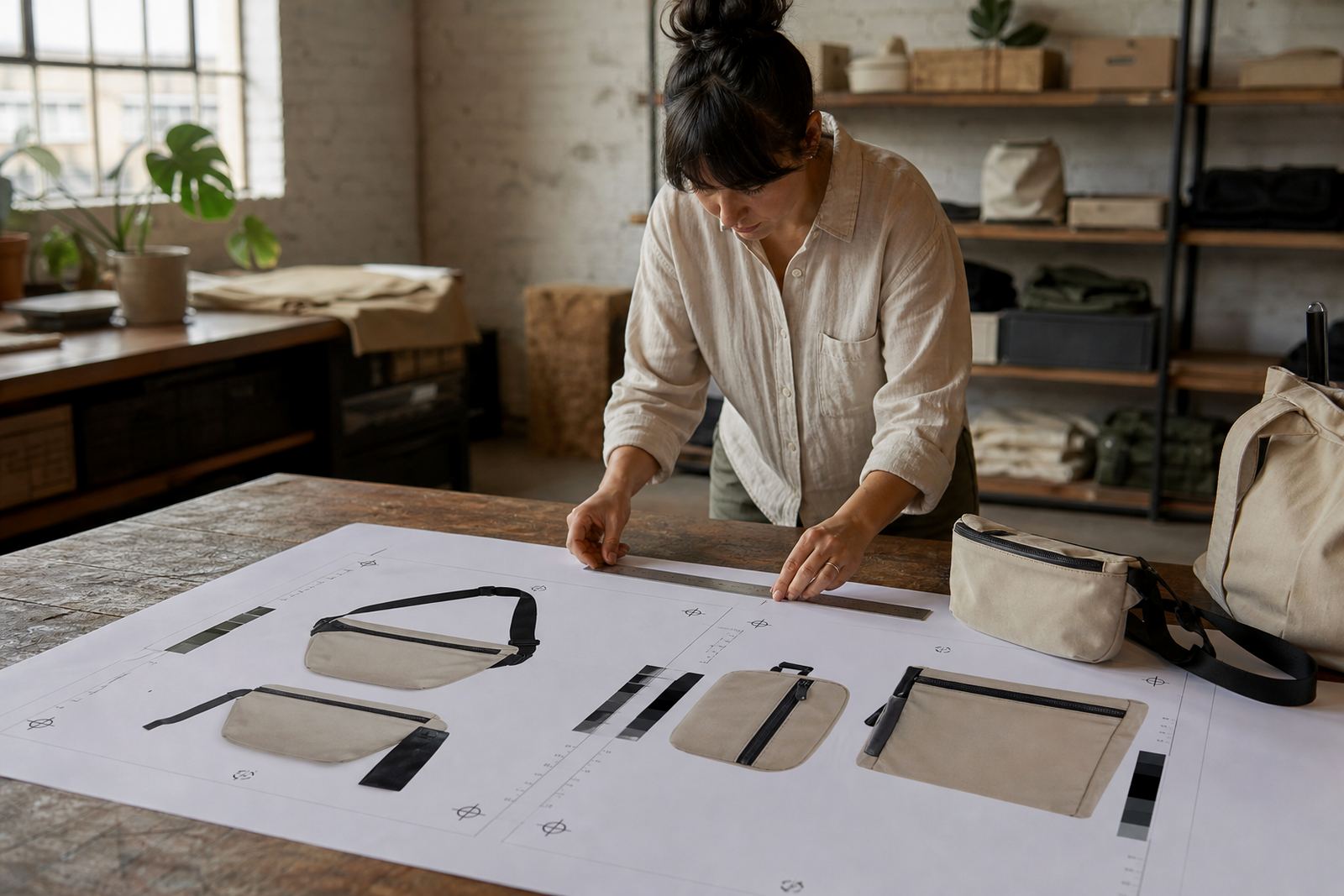
- Check artwork at actual size before production
What visitors notice after three hours on the floor
After a few hours, comfort becomes the main test. A belt bag should sit flat, not bounce, and the strap must be easy to adjust over a jacket, blazer or polo shirt. If the strap slips, twists or digs in, the bag gets worn less and the print loses exposure. The best feedback usually comes from people who have spent a whole morning moving between stands and carrying papers they were given along the way.
For event organisers, this is where product sampling and bulk packing make life easier. If bags are packed with the right inserts and packed in the same order as registration or kitting lists, the handover is smoother. That helps on-site teams at exhibitions, roadshows and client launches where timing is tight and the queue at the entrance can build quickly.
- Check strap length for different body sizes
- Test the bag while walking, not only standing still
- Make sure the zip pull is easy to grip
- Keep the profile low so it does not snag on display stands
A Cape Town example that shows the practical difference
Take a two day expo in Cape Town with visitors moving between an opening keynote, the main hall and a networking session after lunch. A bulky tote becomes tiring by mid morning, especially when it carries brochures and bottled water. A properly sized belt bag lets the same visitor keep essentials on hand while staying mobile and presentable. That matters when the day includes photo moments, venue changes and time spent standing in queues.
For a corporate team based in Montague Gardens, the supply side also needs to be organised. Quality checks, rush orders and split delivery are useful when the event date is fixed and different teams are coming in from Bellville, Somerset West, Johannesburg or Pretoria. The bag itself may look simple, but the planning behind it has to be careful so the right quantities arrive where they are needed, on time and in good condition.
In practice, a good event bag should reduce friction, not add to it. That is the real measure of value.
How to order for a smoother event flow
When you are planning custom-branded belt bags for a trade show, start with the visitor journey. Ask how long they will be on their feet, what they need to carry, and whether the bag must work for both registration and the post-event commute. From there, choose the size, the pocket layout and the branding method that suits the job.
We work with corporate event teams across South Africa from our Montague Gardens base, with support in Cape Town, Johannesburg, Pretoria, Durban and Gqeberha. Our team can assist with artwork setup, product sampling, quality checks and event kitting so the order is ready for the floor. If the brief needs rush orders or split delivery, that can be arranged through the enquiry form on our contact page. A simple, practical bag can make a busy show feel far less hectic, and that is often what visitors remember most.