
Start with the route, not the bag
Before you choose what to pack, map the route and the people involved. A roadshow in Sandton with indoor meetings has very different needs from a summer activation in Umhlanga or a windy outdoor stop in Cape Town. Think about how many hours the team will be on the move, whether there is secure storage in the vehicle, and if any items must stay neat after a long day in the sun or damp coastal air.
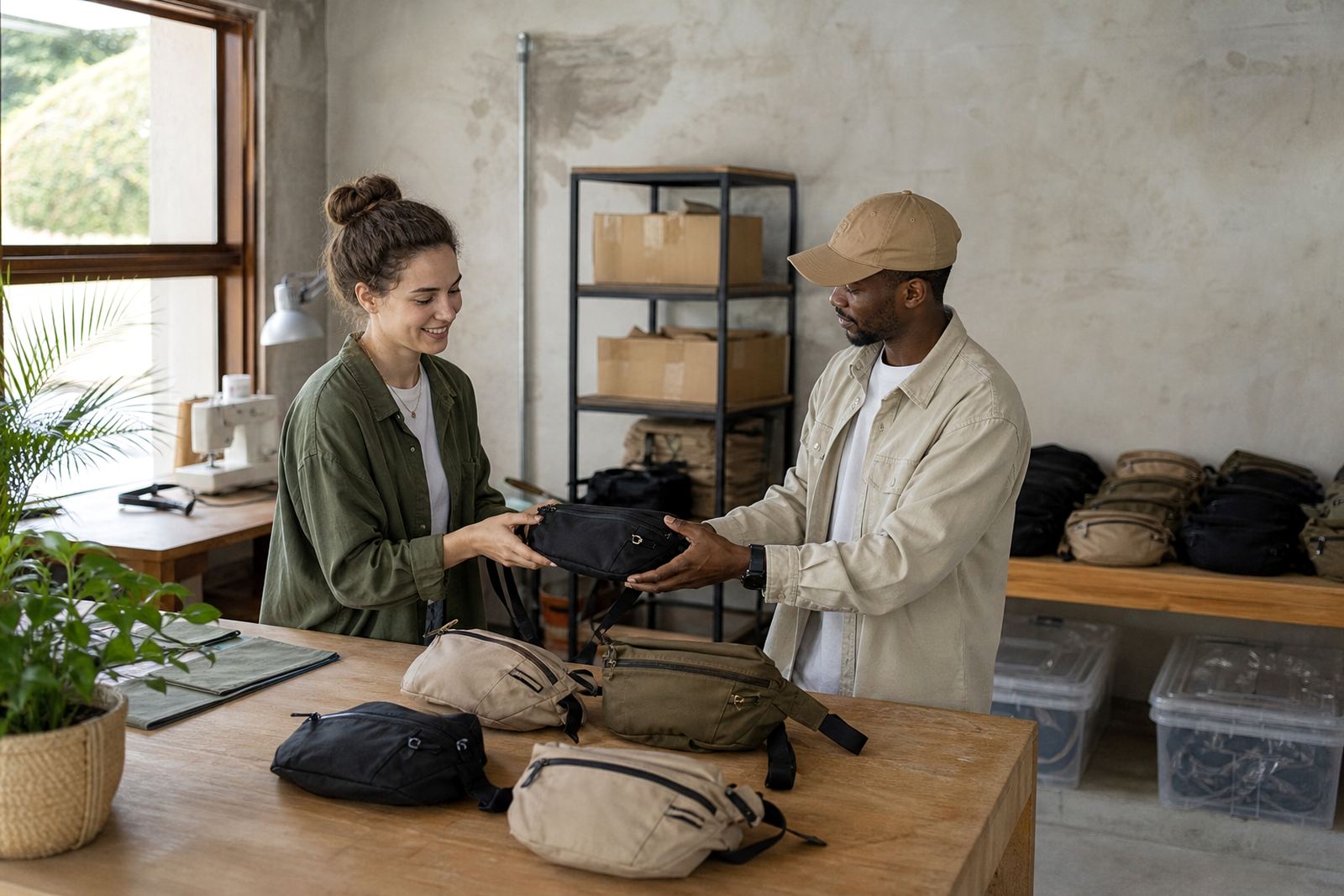
A practical belt bag helps keep the day organised because the essentials stay on the body, not in the boot. That matters when you are moving through airports, conference centres, hotels, retail sites or municipal venues where access can be tight. If the campaign includes multiple staff and split delivery, the bag should be simple to distribute and easy to check at each stop.
- List the route stops and the type of venue at each one.
- Count staff, presenters and support people separately.
- Allow for weather, traffic delays and load-shedding at client sites.
- Plan for at least one spare bag per team in case of damage or spillages.
Choose a size that carries the real essentials
For roadshows, the most useful bag is usually compact but not cramped. It must hold the things that get used often, without becoming so bulky that it bounces around during travel. A slim belt bag works well for sampling cards, a pen, name cards, a small notepad, sanitiser, lip balm and a phone. If the team needs charging cables, USB sticks or a compact power bank, those should fit too, but only if the bag still closes cleanly.
When the bag is too small, people start carrying loose items in pockets and the setup looks untidy. When it is too large, it loses the point of being hands-free. For a mobile campaign, the aim is balance. The best packed bag keeps the front of the body clear, leaves both hands free and lets the wearer move comfortably in a vehicle or through a busy foyer.
- Pick a bag with a secure zip and a strap that can be adjusted quickly.
- Use one main compartment for the core items and one smaller pocket for small pieces.
- Avoid overstuffing, especially if the roadshow includes walking between stands or parking areas.
- For wetter regions, choose material that handles humidity and light rain better than untreated fabric.
Pack contents by task, not by habit
It is easy to pack everything that seems useful and end up with a bag full of clutter. A better method is to assign every item a job. One pocket can hold presentation tools, another can carry admin essentials, and a separate space can hold personal items. This makes it faster to find what you need when the client asks a question or the queue starts moving.
Roadshow teams often need a few small items that are easy to forget but hard to do without. A belt bag keeps them in one place, which helps the team stay consistent from venue to venue. In our experience, the most effective packs are the ones that are checked the night before, then topped up at each stop if needed.
- Core items: phone, pen, notepad, ID card, business cards, sanitiser.
- Client items: sample swatches, folded leaflets, QR code cards, small gifts.
- Admin items: run sheet, venue contact list, transport notes, petty cash envelope.
- Backup items: spare pen, tissues, cable, sticky notes and a compact power bank.
Branding should be visible but still practical
A custom-branded belt bag does more than carry items. It keeps the team recognisable and tidy while moving through public spaces. For roadshows, branding should be clear enough to be noticed, but not so busy that it makes the bag harder to use. A neat logo placement on the front panel or flap works well because it stays visible in photos and in person.
In South Africa, many campaigns run across different cities in one week, so the bag needs to look consistent under different lighting and in different settings. Embroidery can give a polished finish on heavier fabric, while screen printing and heat transfer are useful when the design must be crisp and repeatable across larger orders. Debossing can suit a more understated look for corporate teams that want something smarter. On rainy days in Durban or humid afternoons in Gqeberha, the finish still needs to hold its shape, which is where good production quality matters.
- Keep the logo placement simple and readable from a short distance.
- Match the bag colour to the campaign brief or company colours.
- Ask for artwork setup before production so the size and position are correct.
- Check that branding does not cover zips, seams or useful pockets.
Build in pack logic for the whole team
If ten people are travelling, the bags should not be packed ten different ways. Consistency helps the team work faster and reduces mistakes. Each person should know what is in their own bag, what belongs in the shared kit and where the backup stock is stored. This is especially useful when the roadshow includes different functions such as registration, product demos, support and client hosting.
A simple colour or label system can help. For example, client-facing staff can carry one set of items, while event support carries another. When the team arrives in Pretoria for a morning brief and then drives to a second venue after lunch, everyone can check their bag in seconds instead of unpacking boxes. Small systems like this save time, and they also cut down on missing items.
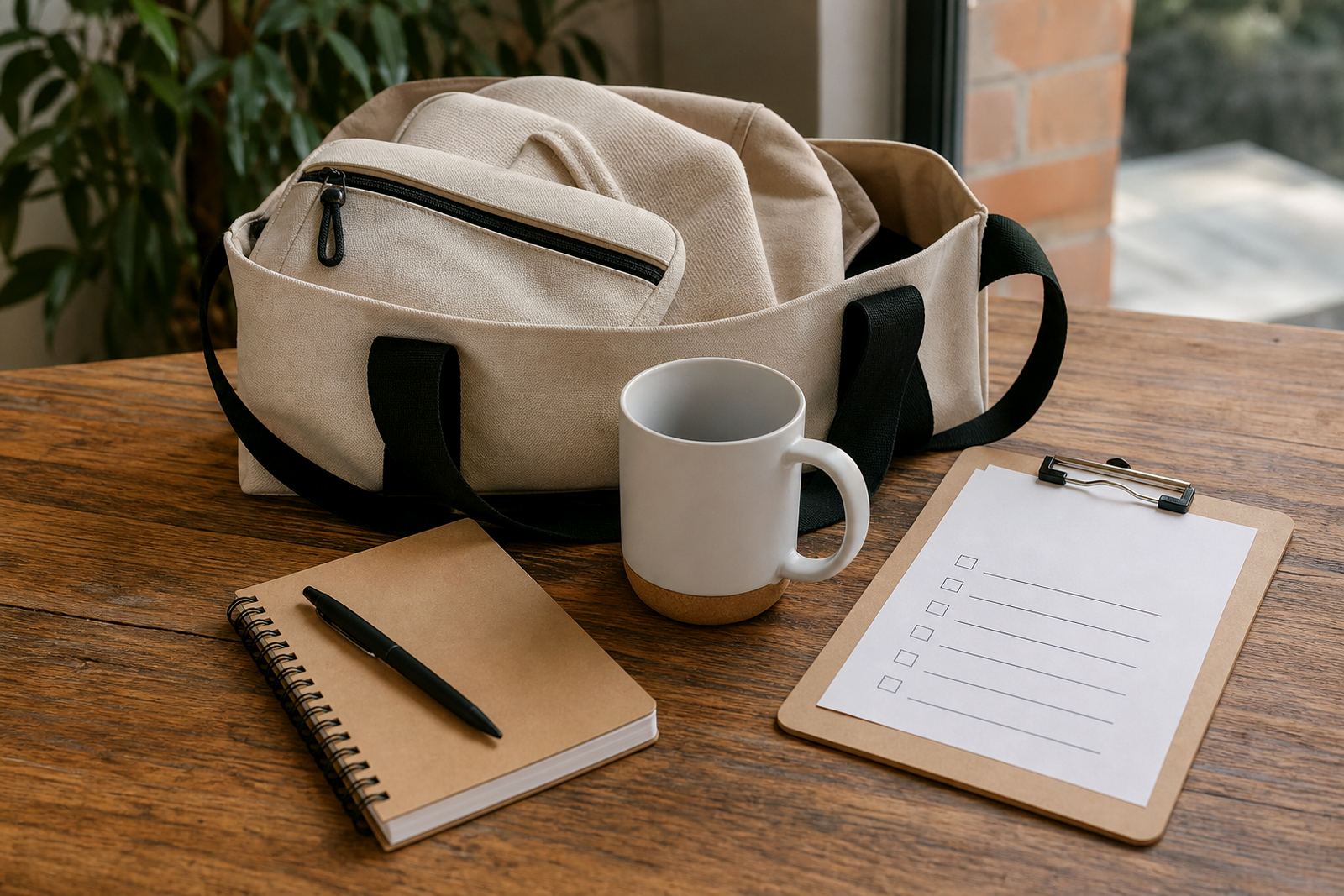
- Use one packing list for the whole campaign.
- Keep shared stock separate from personal items.
- Label spare bags if you are doing split delivery across branches.
- Set a pack-out check before leaving each town or venue.
Think about South African conditions before the first stop
Roadshows across South Africa can move through very different conditions in one trip. Cape Town can bring strong wind and cool mornings, Johannesburg can be dry and busy, Durban can be hot and humid, and Gqeberha often means salt air near the coast. The bag material should hold up to all of that without stretching, fading or becoming sticky after a long day in the vehicle.
Power cuts also change how a campaign runs. If devices need charging between stops, the packing plan should include a power bank and the right cables. If the team is visiting a venue with limited access to outlets, keep the charging items separate from the rest so they can be reached quickly. A good roadshow pack is not just about the item itself, but about how it performs when the day goes off-script.
For example, a brand team travelling from Montague Gardens to a client launch in Bellville and then on to Somerset West may need the same bag to handle product cards, travel notes and a small charger, all in one place. That kind of day is easier when the bag is compact, clearly branded and packed with purpose.
Repack after every stop, not only at the end
The best roadshow teams treat repacking as part of the job. After each venue, check what has been used, what must be replaced and what needs cleaning before the next stop. This prevents last minute scrambles and keeps the bags in better condition for repeat use.
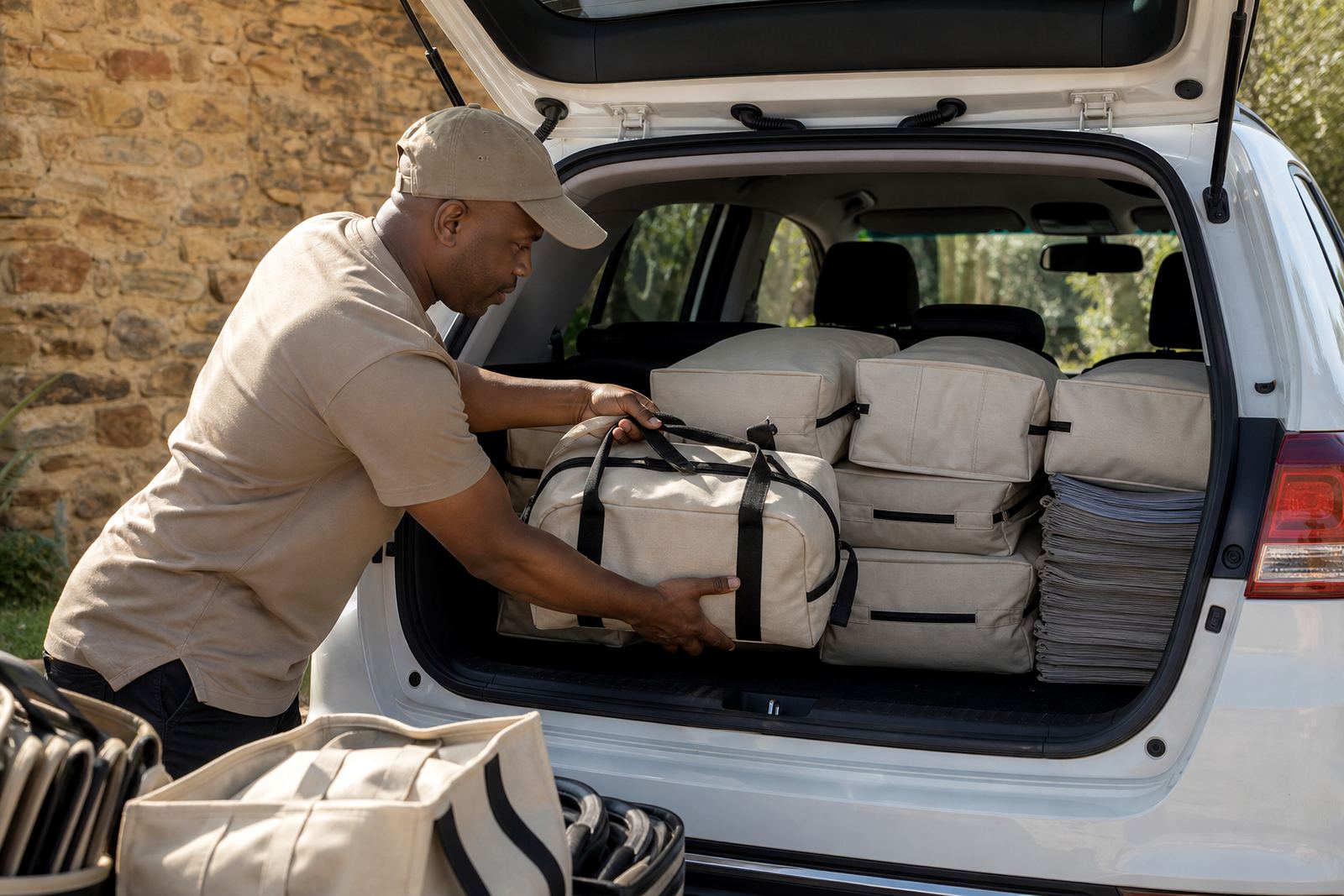
If the campaign includes bulk packing or event kitting before dispatch, it helps to bundle the contents in the same order each time. That way the team can unpack and repack quickly without missing anything. A well-packed belt bag should feel almost invisible during the day, but still carry the items that matter when the client wants a card, a note or a quick update.
For practical roadshows, the rule is simple: pack light, pack clearly and pack for the actual day, not the ideal one. If the bag works when the schedule runs late and the weather turns, it is doing its job.