
Start with the items people will use in the first 48 hours
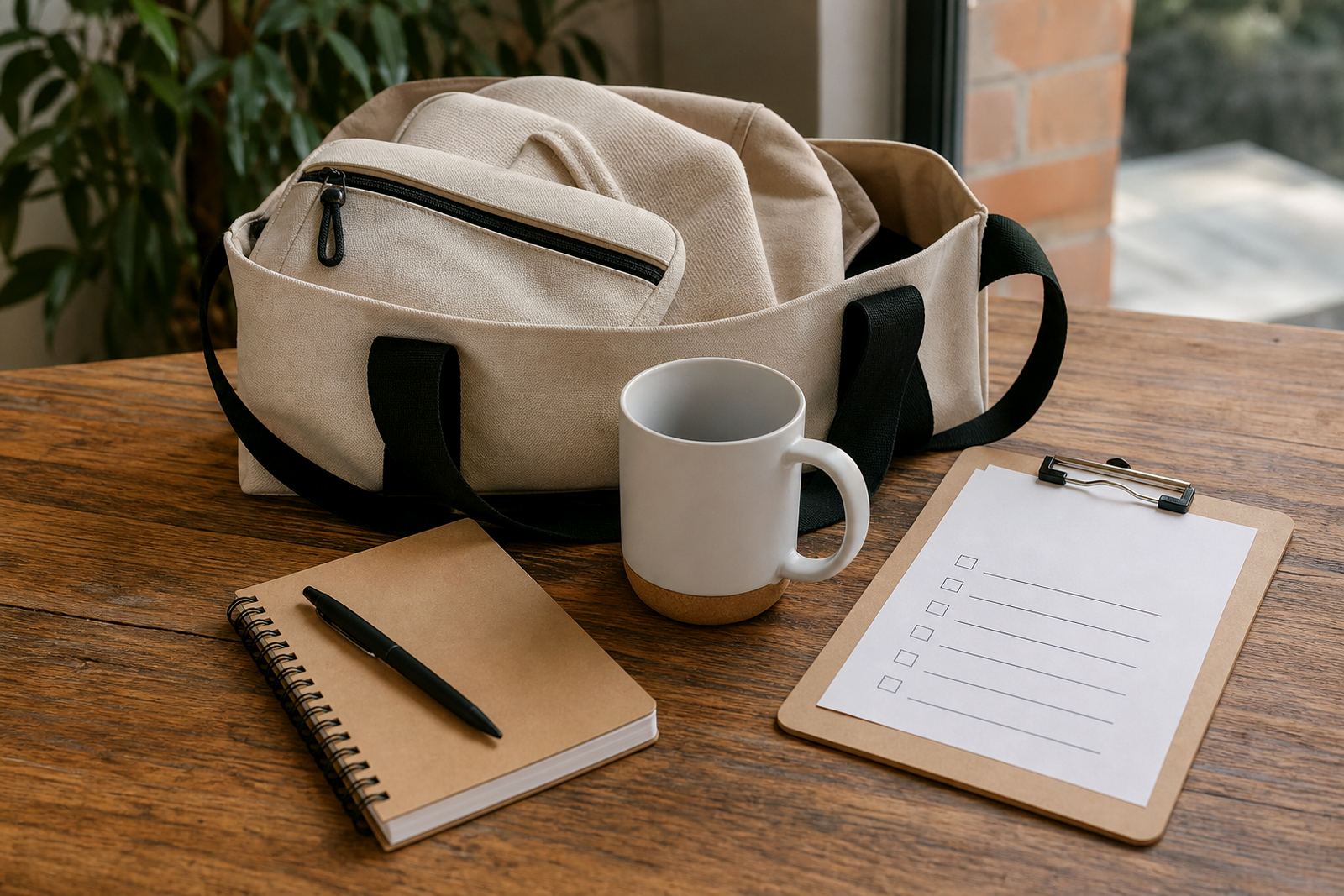
When you put together a welcome bag for employee induction, begin with the basics that get used immediately. New staff should not be hunting for a notepad, ID card clip or water bottle while trying to find their way around the office, the warehouse or a client site.
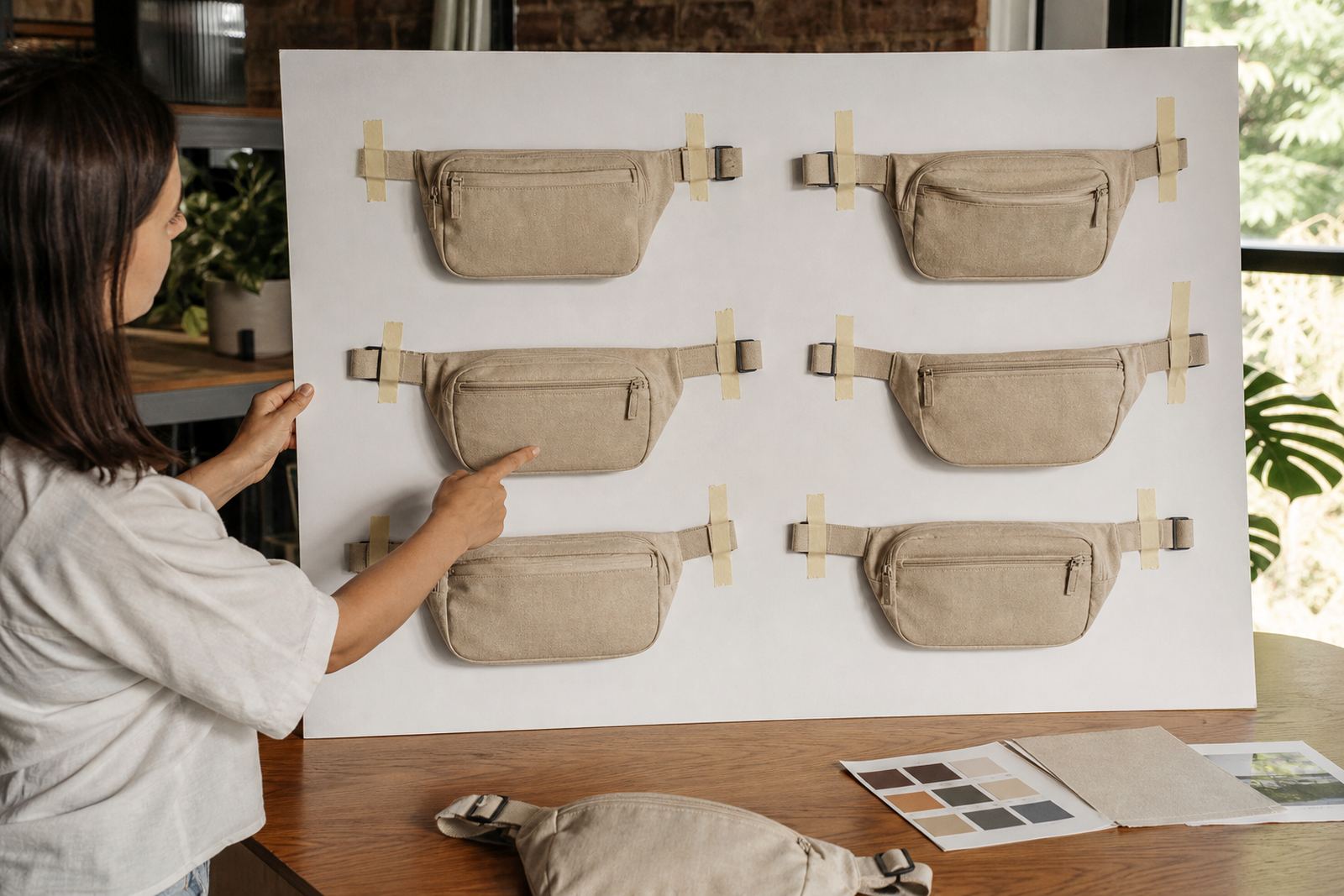
Keep the pack practical. A belt bag is useful because it keeps small items together and leaves both hands free, which matters when someone is carrying files, samples or a laptop bag. If the onboarding happens during a site walk, training session or induction day, the bag should be light enough to wear or carry without getting in the way.
- Branded belt bag or small promo bag
- Notebook and pen
- ID card holder or lanyard
- Welcome letter or induction note
- Site map, parking note or access instructions
- Water bottle or mug if the office provides one
Match the pack to the role and the site
A one-size-fits-all pack usually wastes space and budget. A technician, sales rep, warehouse hand and office administrator do not need the same kit. In Cape Town, for example, a team member starting at a Montague Gardens site may need access notes, PPE guidance and a clear shift schedule, while a head office starter may need a notebook, device care note and team contacts.
For distributed teams, it helps to split the pack by role or by branch. That reduces the chance of sending out the wrong item, and it keeps the contents relevant. It also makes bulk packing easier when you are onboarding in waves rather than all at once.
- Office induction pack: notebook, pen, welcome card, access details
- Field team pack: belt bag, notebook, safety note, contact list
- Client-facing pack: branded promo items, product sheet, appointment card
- Warehouse pack: shift card, PPE checklist, site rules, lock instructions
Use branding that is clear, not overdone
Branded items should be easy to identify and simple to use. A clean logo placement on the front panel of a belt bag is often enough. If the artwork is too small, too busy or set in a hard-to-read colour, the item loses value. The aim is recognition, not clutter.
For welcome bags used in employee induction, choose printing or embroidery that suits the fabric and the way the bag will be handled. Screen printing works well for larger, flat areas. Heat transfer can help with finer detail. Embroidery gives a more finished feel on thicker fabric, though it may not suit every material. We also advise checking the logo size against the final bag size before production, because a good artwork file can still look cramped on a compact bag.
Check the practical extras before packing
The small items often make the biggest difference. A welcome pack that includes the right practical extras can save time on day one and reduce the back-and-forth that slows down induction. Keep an eye on what the person will actually need during the first week, not what looks good in a photo.
If the team works across Cape Town, Pretoria or Gqeberha, include clear notes for local procedures. That might mean building access times, uniform expectations, security sign-in or where to collect keys. It sounds simple, but the admin side can go wrong quickly if the pack is vague, and then everyone spends more time fixing it later.
- Access card or temporary pass note
- Uniform or dress code note
- Wi-Fi details or IT handover sheet
- Contacts for HR, manager and supervisor
- Health and safety summary
- Lunch, tea or break room info
Allow for bulk packing, quality checks and split delivery
When you are preparing onboarding bags for a full intake, the packing stage matters as much as the contents. Items should be counted, checked and grouped before dispatch so that each new starter gets the same pack. This is where bulk packing and quality checks keep things tidy, especially if the onboarding includes multiple branches.
Split delivery can also help when your team is spread across South Africa. For example, one batch may go to Montague Gardens, another to Johannesburg and a smaller run to Durban. If the packs are numbered and checked before they leave, the receiving team can hand them out without sorting through mixed cartons. It saves time and avoids missing items, which is a common headache during busy induction weeks.
A simple Cape Town example that works in practice
Say a Cape Town business is welcoming 25 new staff members across sales, operations and admin. The organiser chooses a compact belt bag, adds a notebook, pen, welcome card and site info sheet, then separates the packs into role-based groups. The field team gets an extra safety note and branded water bottle, while the office group receives a counter-free induction checklist and team directory. That setup keeps the pack useful and does not bloat the budget.
At BeltBag Branded, we often see that a small, well-planned welcome bag makes a stronger first impression than a large pack with items nobody uses. The point is to support the person through the first week, not to fill a bag for the sake of it. If the contents are right, the pack gets used and remembered.
Final pack-off before the bags go out
Before dispatch, do one last check against the induction list. Count every item, confirm the artwork, and make sure the packs are grouped by branch or department if needed. If you are working to a launch date, allow extra time for rush orders, artwork setup and final approval. That buffer is worth it, especially when load-shedding or courier delays can upset the schedule.
A clean onboarding pack checklist keeps the process calm. It helps the new starter feel sorted from the start, and it gives the business a proper standard to repeat for the next intake.