
Start with the right handling routine
Most bag damage happens before the event even begins. Creasing, scuff marks and loose stitching usually come from rough packing, overfilling or dragging bags across concrete floors and loading bays. If you are issuing belt bags to staff or placing them in event packs, set one simple rule: handle them once, then store them neatly until the day they are needed.
For teams working between Cape Town, Johannesburg and Durban, that matters more than most people think. Hot cars, humid storerooms and repeated loading can all affect the shape and finish of a branded bag. Give each bag enough space in storage, and avoid pressing heavy cartons on top of printed or embroidered items.
- Keep bags flat or lightly filled with tissue to help them hold shape.
- Do not stack loose metal items or sharp promotional items inside them.
- Move bags in clean cartons or sealed tubs when doing split delivery.
- Check straps, zips and clips before distribution, not after.
Keep dust, moisture and sun off the fabric
In South Africa, storage conditions can change quickly. Coastal humidity in places like Gqeberha and Durban can leave fabric feeling damp if bags are packed away in a closed store room with poor airflow. In Pretoria and inland areas, dust is the bigger issue, especially where stock sits near workshop doors or open loading areas.
Store bags in a dry, shaded space with steady airflow. If the product has a printed surface, avoid direct sunlight for long periods because colour can fade faster than expected. Even a short exposure every day adds up. For branded items used at outdoor corporate events, it is worth keeping spare stock in sealed packaging until event day, because sudden rain or wind can affect presentation very quickly.
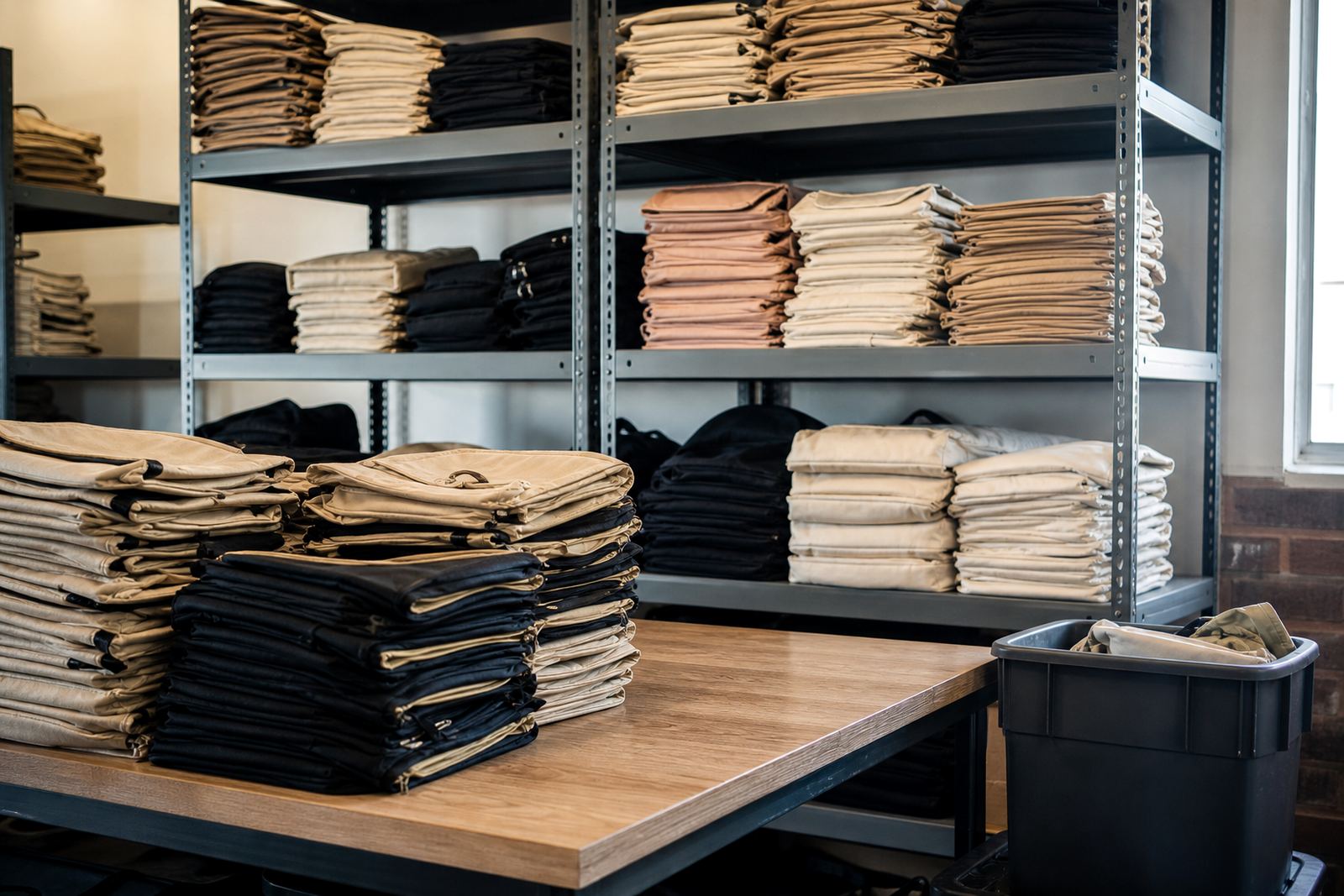
- Use shelves, not floor storage, to reduce moisture transfer.
- Keep products away from windows and hot roofs.
- Separate clean stock from returned items.
- If bags feel damp, air them out fully before repacking.
Clean the bag the right way for the material
Different materials need different care. A quick wipe may be enough for one bag, while another needs a gentler method to protect print, embroidery or debossed detailing. The safest approach is always to test a small hidden section first, especially on coloured fabrics. Too much scrubbing can lift ink or flatten the texture, and that is hard to reverse.
For everyday dirt, a soft cloth with mild soap and clean water is usually enough. Avoid strong bleach, solvent cleaners and rough brushes. If the bag has an inner lining, empty it fully and turn it out before cleaning crumbs, dust or loose glitter from event inserts. Let it dry naturally, away from heaters and direct sun. Do not pack it while still slightly damp, because trapped moisture can leave a smell and weaken the finish.
- Use lukewarm water and a soft cloth for spot cleaning.
- Blot marks instead of rubbing them hard.
- Keep washing to a minimum so the finish lasts longer.
- Allow full drying before storing or reissuing the bag.
Protect the branding during daily use
Branding is usually the first thing people notice, so that is where care should begin. Whether the bag has screen printing, heat transfer, embroidery or debossing, the printed area should not be folded tightly, pressed under heavy items or rubbed against rough surfaces. If your team uses the bags at expos, roadshows or site visits, a small amount of guidance can save a lot of replacement cost later.
For example, a Cape Town sales team handing out welcome packs at a conference in Century City can keep the bags looking neat by packing them flat in cartons, then distributing them right before registration opens. That way the branding stays clean and the bag reaches the client in good condition. It is a simple step but it makes a strong impression.
- Do not overfill the bag beyond its intended size.
- Keep keys, tools and sharp pin badges in separate pouches.
- Avoid dragging the bag over tar, paving or rough flooring.
- Close zips and clips properly before transport.
Packing for events, kitting and split delivery
When bags are used for corporate events, the care plan should include packing as well as storage. Good event kitting keeps each unit clean and consistent, especially when items are travelling to different branches or venues. If the order is split between Cape Town, Johannesburg and Pretoria, use labelled cartons and a simple count sheet so nothing gets lost in transit.
It also helps to pack by sequence. Place heavier items at the bottom, soft items in the middle and the bag itself on top or in a separate section. This keeps the product from getting crushed. For outdoor launches or roadshow packs, make sure each carton is sealed against dust and rain. In load-shedding periods, it is easier to finish packing early in the day and store stock in a cool room before collection, rather than rushing at the last minute.
- Label cartons by venue, branch or event date.
- Use inner packing to keep each bag from shifting.
- Check every bag after packing, not just at dispatch.
- Keep a small spare quantity for last-minute replacements.
Set a return and reissue process
If bags are being reused for staff, conferences or client gifts, put a return process in place. Returned bags should be inspected for stains, broken zips, loose threads and print wear before they go back into stock. A short check at the end of each campaign can save a full batch from being handed out in poor condition.
This works well for businesses with branch activity across the country, from Bellville and Somerset West through to Durban and Gqeberha. One person can collect and sort returns, while another signs off the count and condition. Keep damaged stock separate so it does not get mixed into the next issue. If a bag is too marked to reuse, remove it from circulation at once instead of trying to push it through another event. Small habits like this keep presentation consistent and the budget under control, even when the programme is busy.
At BeltBag Branded, we see that the best results come from simple care, clear packing and regular checks. A good bag should arrive neat, carry its branding properly and still look presentable after the event. That starts with how it is handled on day one.