
Why training day bags matter at the door and in the room
On a training day, the bag is often the first thing people keep and the last thing they use. If it can hold an A4 workbook, a pen, a notepad and a badge without sagging, it already does half the job. For HR teams, L and D coordinators and event planners, that means fewer loose papers on tables and a cleaner look for the whole session.
Many clients use training bags for induction days, compliance training, sales workshops and multi-day learnerships. They also help with repeat attendance because people tend to reuse a bag that feels useful. In Cape Town and other coastal areas, a practical bag also needs fabric that handles humidity and a print that stays neat after being stored in a car or locker.
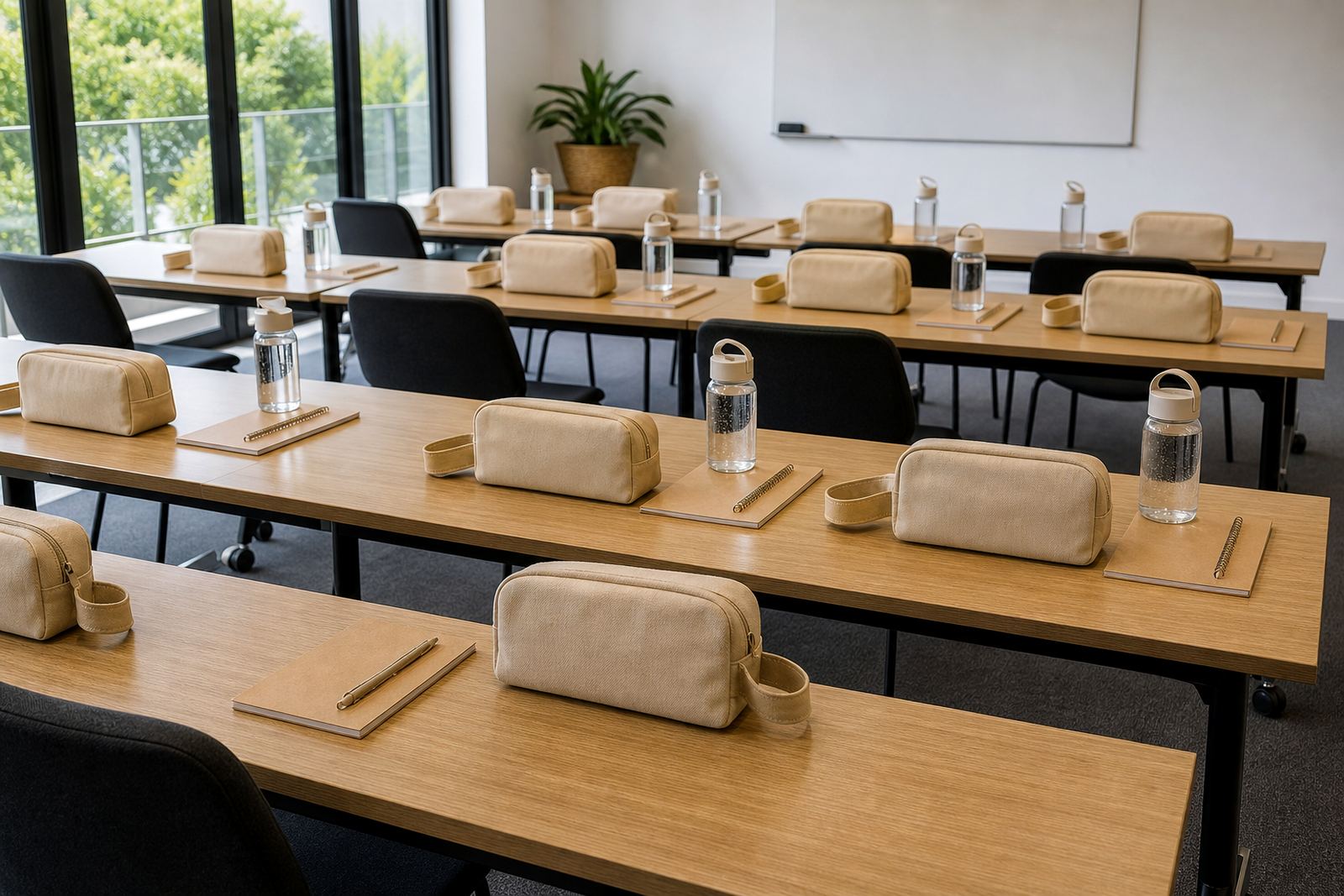
What usually goes into a training day bag
The best layout starts with what the attendee needs before, during and after the session. A bag that is too small ends up overstuffed, while one that is too large gets left on a chair and forgotten. We normally look at the contents first, then choose the size and branding method.
- A4 manuals or printed handouts
- Training workbook, exercise sheets and attendance forms
- Ballpen, highlighter and sticky notes
- Name badge or lanyard
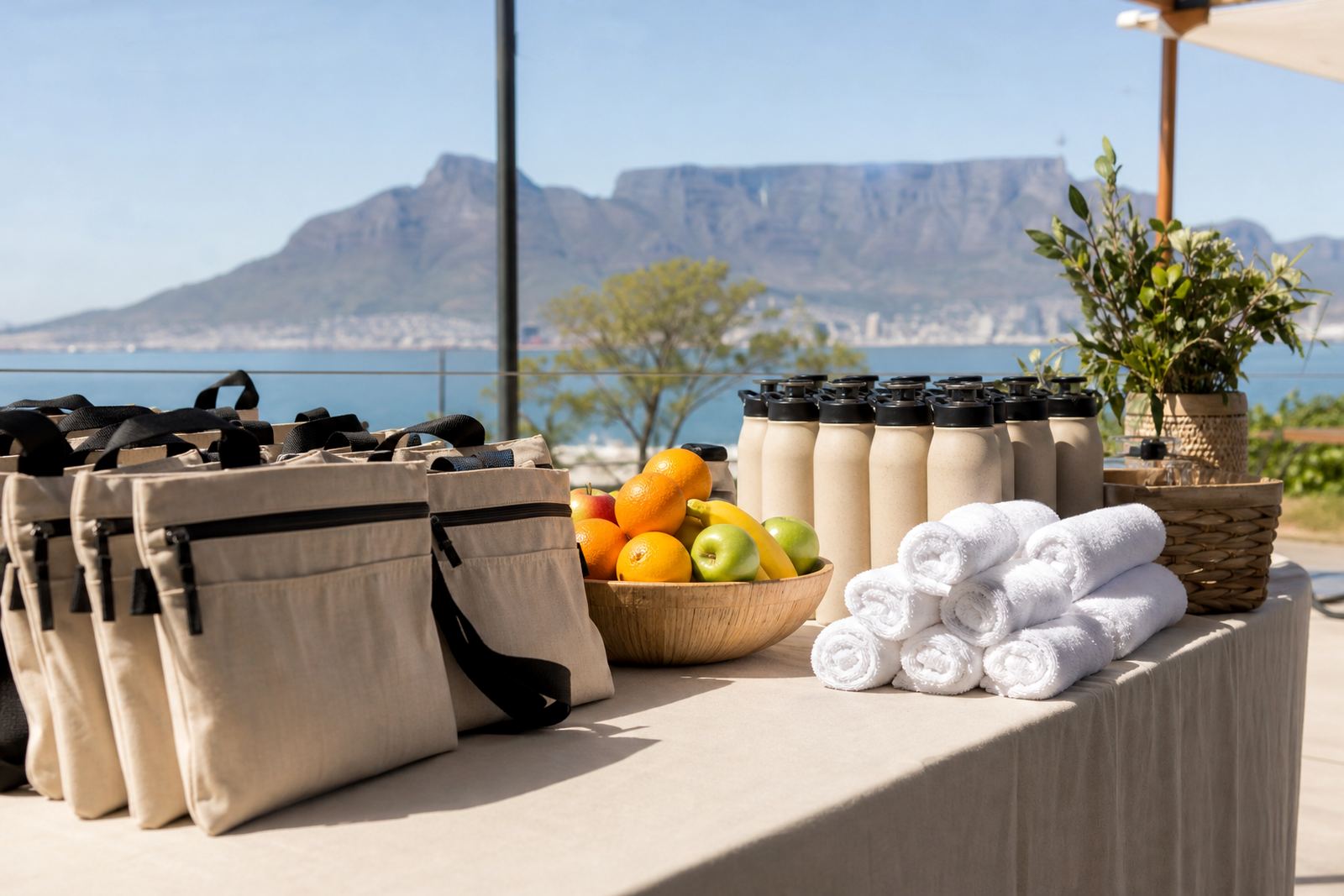
- Water bottle or small snack pack
- USB drive, calculator or compact charger
For heavier sets, a stronger handle and boxed stitching help the bag keep its shape. If the pack includes a bottle and a thick manual, we usually suggest a wider gusset so the contents do not press awkwardly against the print area.
Branding choices that work for training packs
Training bags are often seen in conference rooms, taxi ranks, airport pick-ups and open-plan offices, so the branding needs to read clearly from a distance. Simple logos with strong contrast usually perform better than busy artwork. If the bag is small, keep the logo to one side and leave enough space around it for a clean finish.
Depending on the fabric and artwork, we can use screen printing, heat transfer or embroidery. For a more premium corporate look, debossing works well on certain materials and gives a neat result. If your team wants different departments or sites identified, we can also split the branding by colour or add a short role name under the logo.
- Keep artwork to 1 or 2 colours if the budget is tight
- Use a larger print on plain backgrounds for better visibility
- Ask for a sample layout before bulk production
- Check placement against zips, seams and pockets
Planning the layout so the bag actually gets used
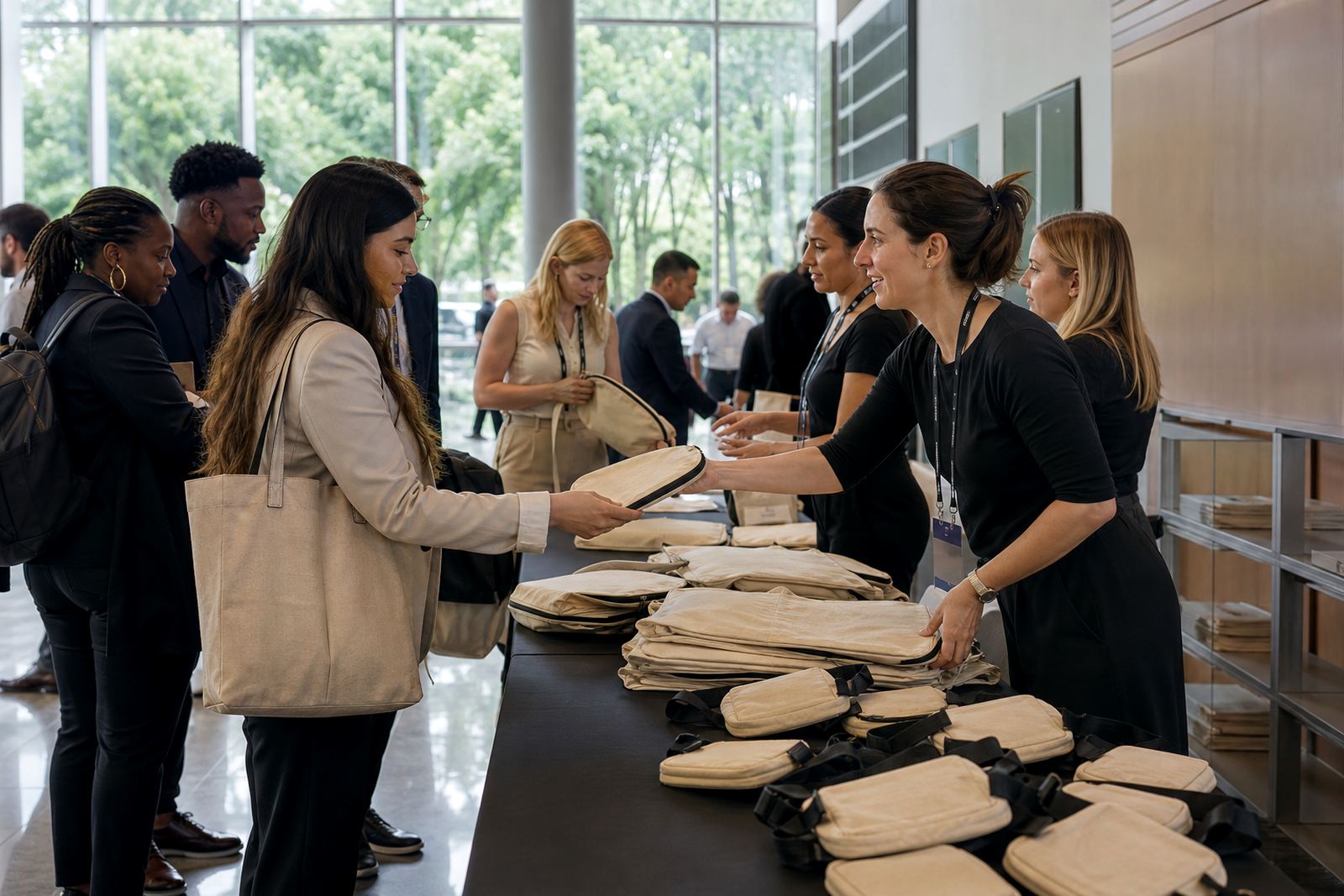
Good layout is about day-to-day behaviour, not just appearance. If attendees need to open the bag quickly at registration, a top zip or wide opening makes life easier. If the pack is for note-taking across a full day, an internal divider can stop papers from bending under a water bottle or charger.
For long training programmes, some companies add a front pocket for name tags and a side pocket for refreshments. That sounds small, but it saves time when people are moving between breakaway rooms or collecting course material. In Durban and Gqeberha, where travel time and weather can affect the day, a zipped design is often safer than an open tote. It keeps loose items from falling out in taxis or on site.
We also recommend checking the bag against the size of your printed manuals before you approve the final spec. A workbook that is too wide by even 10 mm can make the whole pack feel cramped, so it is better to measure first and not guess.
Common mistakes with training day bags
The most common mistake is treating the bag as an afterthought. If the client orders bags after the manuals have been printed, there is a real chance the materials will not fit properly. Another issue is overbranding. A crowded front panel can look noisy and make the bag less likely to be reused outside the event.
Other problems we see include weak stitching on the handles, flimsy lining, and colours that show dust too quickly. In South Africa, where bags may travel between office, home and vehicle, a light fabric can look tired fast. For outdoor events or venues with limited storage, a bag that folds neatly is often a better choice than one that looks impressive but is awkward to carry.
- Do not finalise print before checking bag size
- Do not choose a weak handle for a heavy training set
- Do not overfill the artwork space
- Do not ignore delivery timing for multi-city rollouts
Budget ranges for corporate training day bags
Budget depends on quantity, material, branding method and whether you need extras like split delivery, event kitting or rush orders. As a working guide, simple branded training bags for large quantities can start from about R35 to R60 per unit. Mid-range options with better structure or an extra pocket often sit between R65 and R120 each. Higher-end bags with embroidery, stronger finishes or premium hardware can reach R130 to R220 and more, depending on the spec.
If you are ordering for a training series, ask for pricing at 100, 250 and 500 units so you can see where the value improves. Some clients save money by keeping the bag plain apart from one clear logo, then using the budget on quality inserts, stationery and neat packing. That usually gives a better result than trying to squeeze too many features into a small spend.
For Cape Town and Gauteng rollouts, lead times can be planned around dispatch points in Montague Gardens, Johannesburg, Pretoria and the other supply areas. That helps when you need stock to arrive in stages, especially if venues, branches or facilitators are all in different cities.