The brief from a Paarl event team
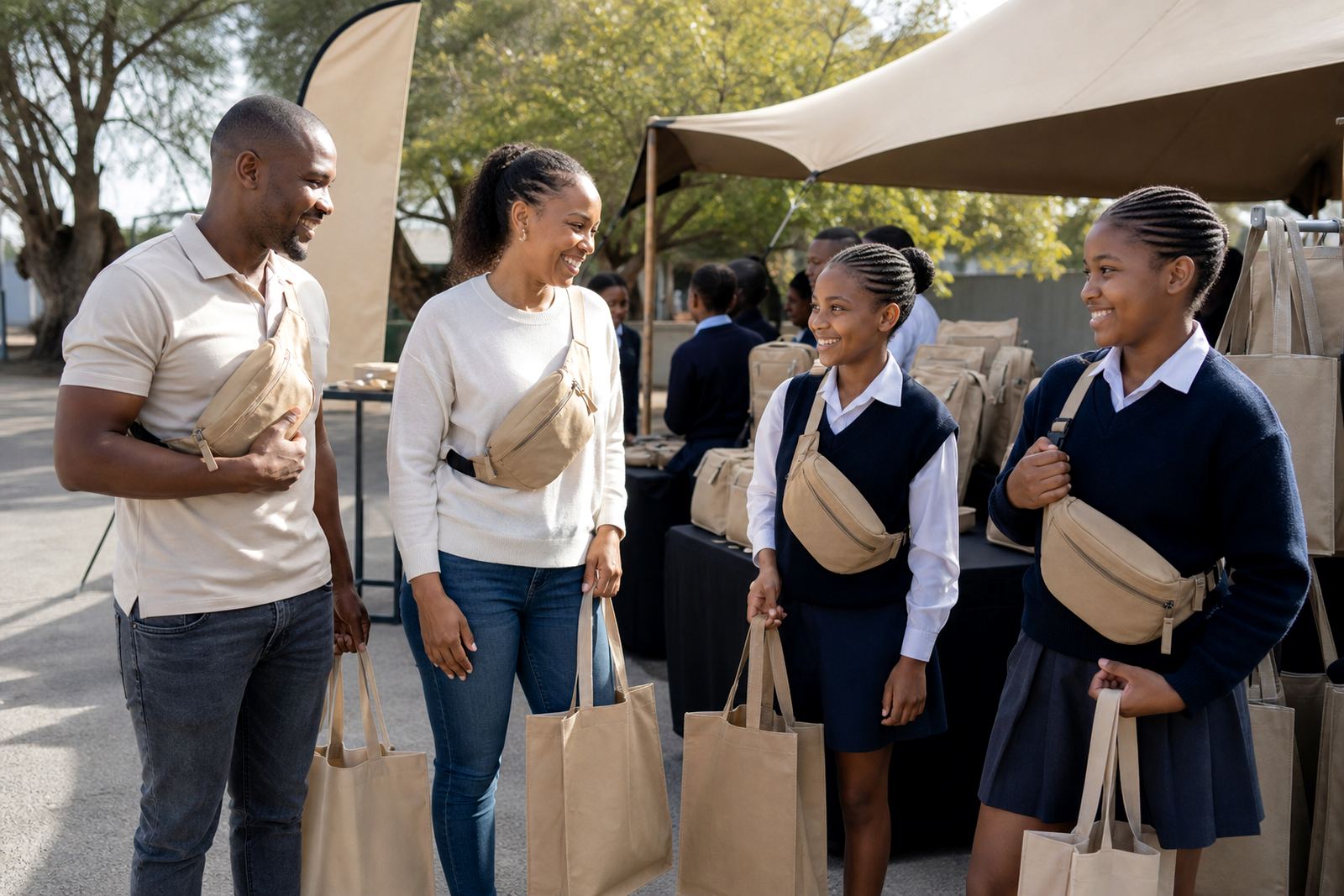
The client was an events and marketing team based in Paarl, supporting a regional agri expo that drew farmers, suppliers and distributors from across the Western Cape and further afield. They needed a mix of custom-branded belt bags and promotional carry bags that could be handed out at registration, used by staff on the floor and kept by visitors after the show.
The main requirement was simple: the bags had to look smart, handle outdoor conditions and stay useful after the expo. That meant choosing materials that would cope with dust, a bit of moisture from early morning dew, and the usual load of brochures, samples, pens and phones. The client also needed the branding to stay clear from a distance, because the venue had busy walkways and display rows.
We worked from a single artwork direction and kept the colour palette close to the event’s printed material so the bags sat comfortably alongside banners, badges and exhibitor packs. The client wanted a professional finish, but not something flashy that would look out of place at an agricultural trade day.
What we supplied for outdoor use
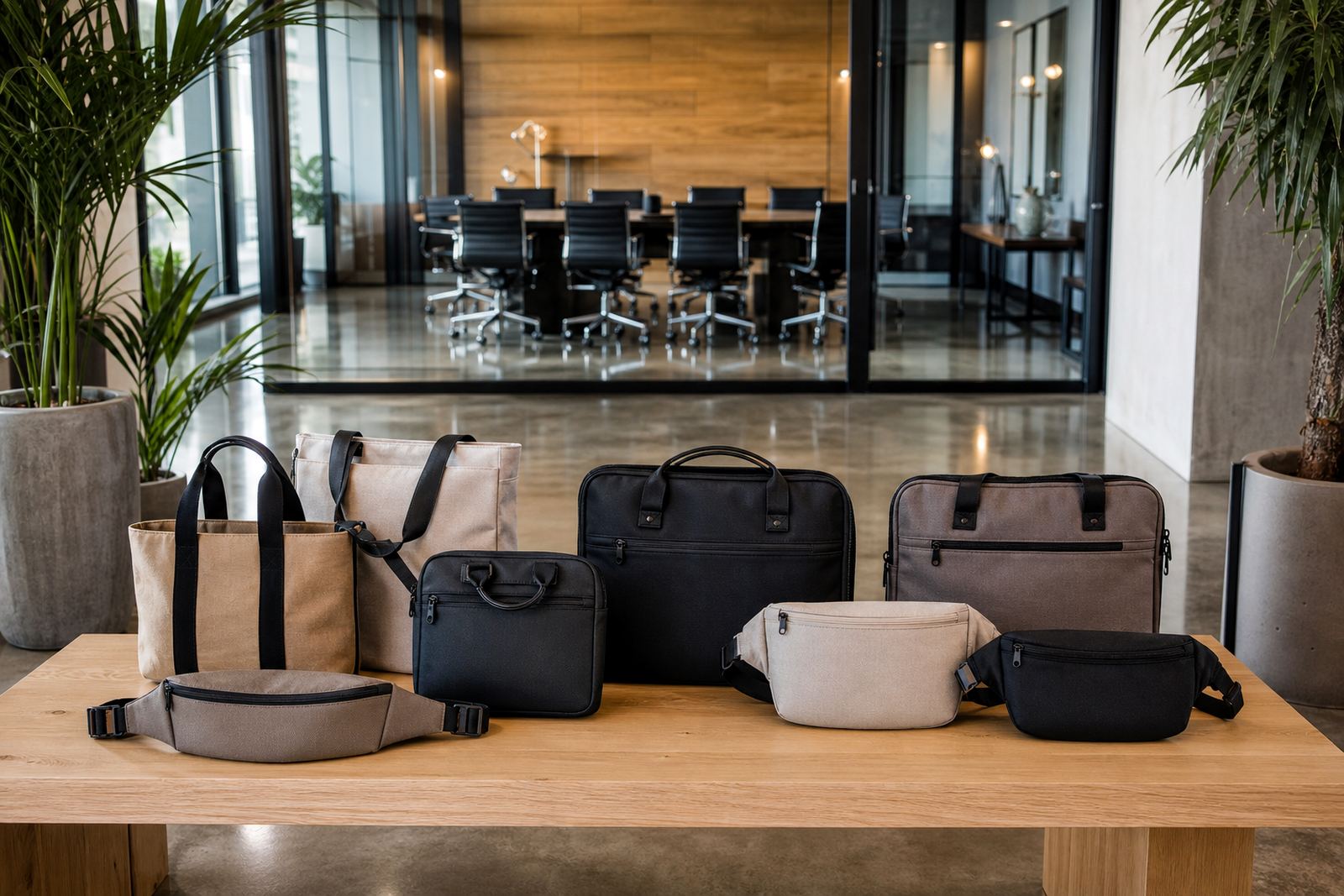
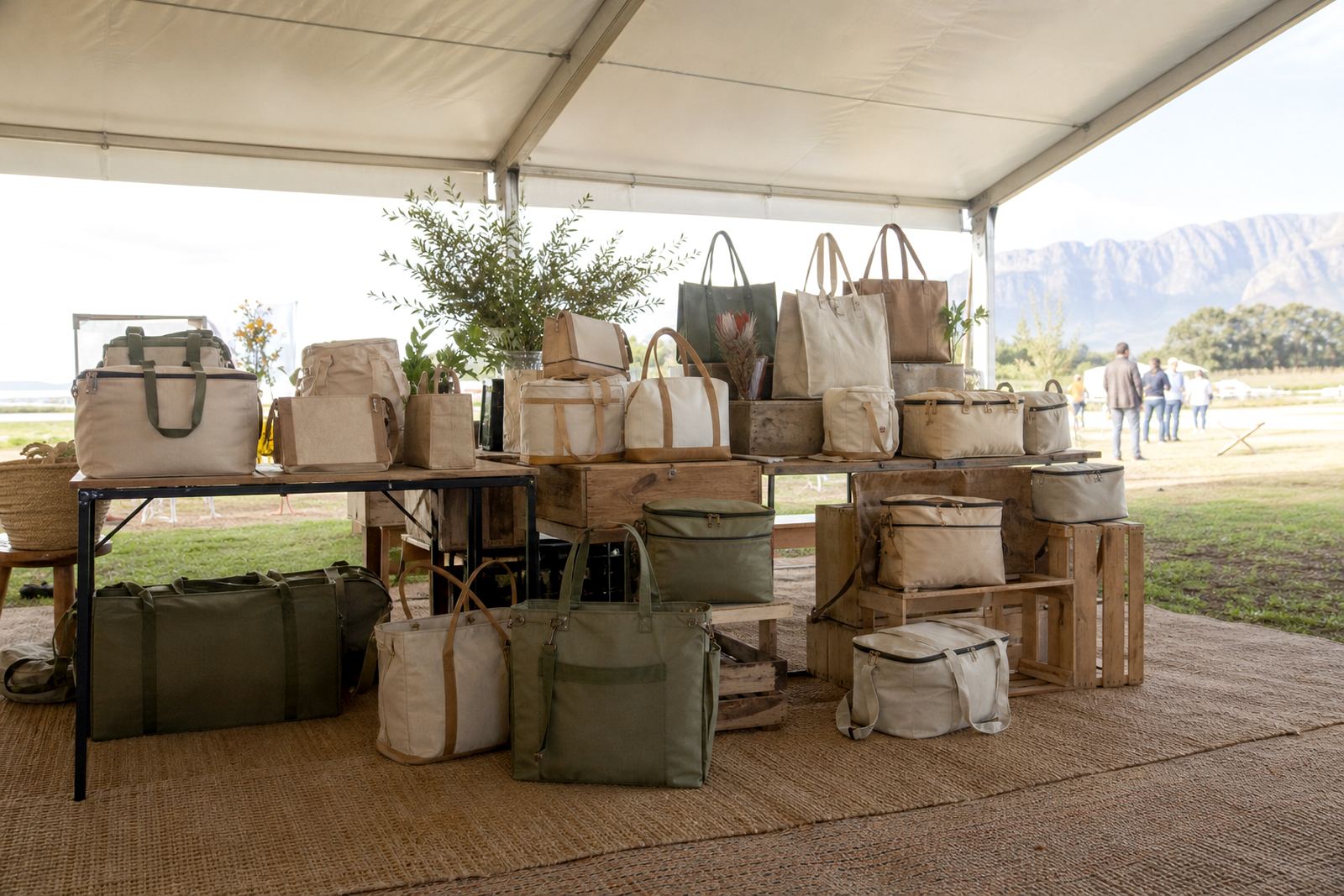
We proposed a practical mix of belt bags and larger promotional bags so the client could issue different items to staff, VIP guests and general visitors. The belt bags were designed for hands-free movement, while the larger bags were better for brochures, catalogues and take-home material. This helped the team avoid one-size-fits-all packing, which often creates waste and extra cost.
- Belt bags with a compact main compartment and front zip pocket
- Promotional bags sized for brochures, product sheets and light sample packs
- Durable print placement on the front panel for clear brand visibility
- Reinforced stitching on key stress points for repeated use
- Clean, consistent colour matching across the full order
For the expo floor, practicality mattered more than anything. Staff needed bags that would not swing around awkwardly while moving between stalls, and visitors needed something easy to carry while browsing. We kept the shape neat, the branding legible and the finish easy to wipe clean, which helps when a venue gets dusty over a long day. A small typo in the initial brief was corrected during setup so the final run stayed accurate and tidy.
Production planning, sampling and print control
The project ran over three weeks from artwork approval to dispatch. In week one we checked logo placement, sizing and print method, then prepared a sample plan so the client could compare finish options before sign-off. In week two we moved into production after confirming the final quantities, and in week three we completed quality checks, packed the order and arranged split delivery to suit the event schedule.
Because the expo was outdoors, we paid close attention to material choice and print durability. Heat exposure in Paarl can be hard on lighter finishes, so we avoided anything that would fade quickly or show scuffing after a single use. Where needed, we used a print method that held sharp edges and good colour density without making the bag feel stiff.
- Artwork setup with clean logo positioning and consistent sizing
- Product sampling to check handle feel, zip action and print appearance
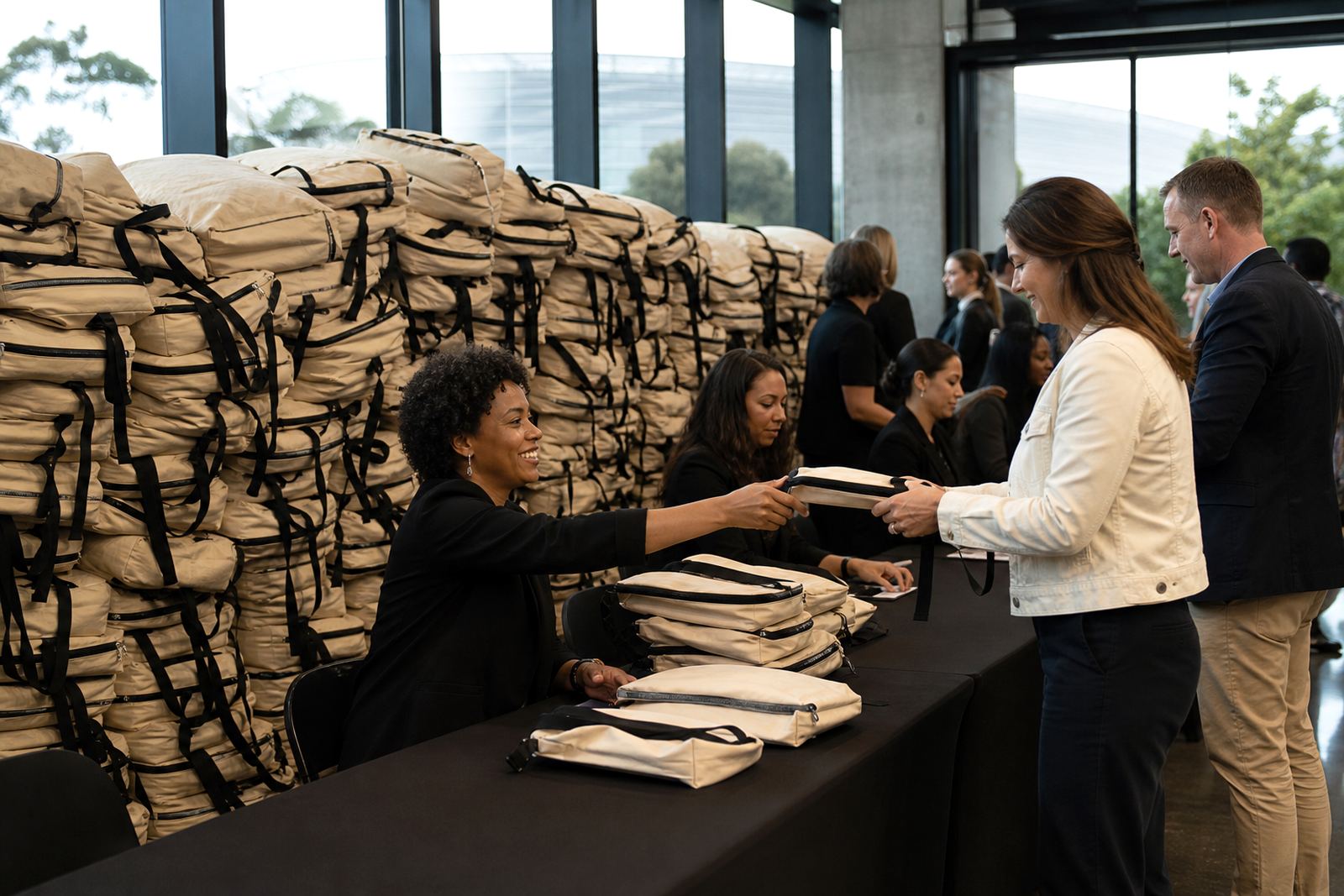
- Bulk packing by item type for easier handover at the venue
- Quality checks on stitching, alignment and print clarity
- Split delivery for staff packs and visitor packs
The client also asked for a rush-friendly backup plan in case numbers shifted close to the event. We allowed for that by keeping the packing structure flexible and making sure the production lead could adjust quantities without causing delays. That kind of planning is useful when an expo team is juggling exhibitor changes, registration lists and last-minute sponsor additions.
Branding choices that worked on the day
The branding had to read clearly in bright daylight and still look tidy indoors at registration counters and demo stands. We used a strong front-facing logo placement and kept supporting artwork limited, because too much detail tends to get lost when people are carrying a bag while walking between stands. The result was simple, practical and easy to recognise.
We also matched the finish to the tone of the event. Agricultural expos often need a more grounded look than a corporate conference, and the client wanted something that felt useful rather than ornamental. By keeping the bag style direct and the branding neat, the packs fitted the setting well. There was no need to overcomplicate it.
- Clear logo visibility from registration to show floor
- Practical bag sizes for samples, brochures and personal items
- Finishes chosen to handle sun, dust and repeated handling
- Consistent look across staff, guests and exhibitor support packs
In the final handover, the client noted that the bags worked well for both event use and later re-use back at the office or on the road. That extended life matters, because a bag that stays in circulation keeps the brand visible long after the expo ends. It also gives better value per unit than a throwaway item that gets left behind after one afternoon.
Packing, dispatch and on-site convenience
Once production was complete, our dispatch and quality team packed the order in sequence so the client could separate items quickly on arrival. That mattered because expo setup days are usually noisy, busy and full of moving parts. Clear packing order reduced handling time and helped the team issue the right bags to the right people without confusion.
We arranged the shipment to suit the venue schedule and kept the delivery windows tight enough for smooth receiving. For events in the Western Cape, traffic and parking around large venues can eat time fast, so good dispatch planning is just as important as the print itself. The bags arrived ready to hand over, with no need for re-sorting on site.
As with many outdoor events, there were small day-of changes. Because the packing was organised by use case, the client could shift a few bags between registration and exhibitor support without disturbing the rest of the allocation. That flexibility saved time and kept the front of house running properly. It also meant fewer requests for emergency stock at the last minute, which is always a good thing.
What we would repeat for the next Paarl expo
If we were doing this project again, we would keep the same approach: start with a practical bag mix, confirm artwork early and lock in packing by user group before production begins. For outdoor shows, that process gives the cleanest result and avoids waste.
We would also keep the split delivery model, especially for a multi-day event where staff packs and visitor packs may be needed at different times. It gives the client more control and reduces congestion at setup. In a busy expo environment that kind of detail matters.
The project showed that branded bags do not need to be complicated to work well. When the product size, finish and packing plan match the event properly, the result is useful on the day and still visible weeks later. That is exactly what the Paarl team needed, and it is the same approach we would use again for a similar agricultural show.
Key facts
| Project | Paarl Agri Expo |
|---|---|
| Client type | Regional event and marketing team, Paarl |
| Lead time | 3 weeks |
| Products supplied | Custom-branded belt bags and promotional bags |
| Decoration methods | Logo printing, screen printing, heat transfer |
| Fulfilment | Quality checks, bulk packing, split delivery |
| pull | Practical bags do the job best when the event is outdoors and the schedule is tight. |